
If there’s one piece of car maintenance advice that nearly every driver has heard, it’s this: get your oil changed every 3,000 miles. For decades, that number was gospel – printed on stickers, repeated by mechanics, and accepted without question by generations of car owners.
The truth is more nuanced. Modern engines and modern motor oils have changed the equation significantly, and following outdated advice can cost you more money than necessary. But ignoring oil changes altogether, or stretching them too far, is one of the fastest ways to shorten your engine’s life.
Here’s what you actually need to know.
Why Engine Oil Matters
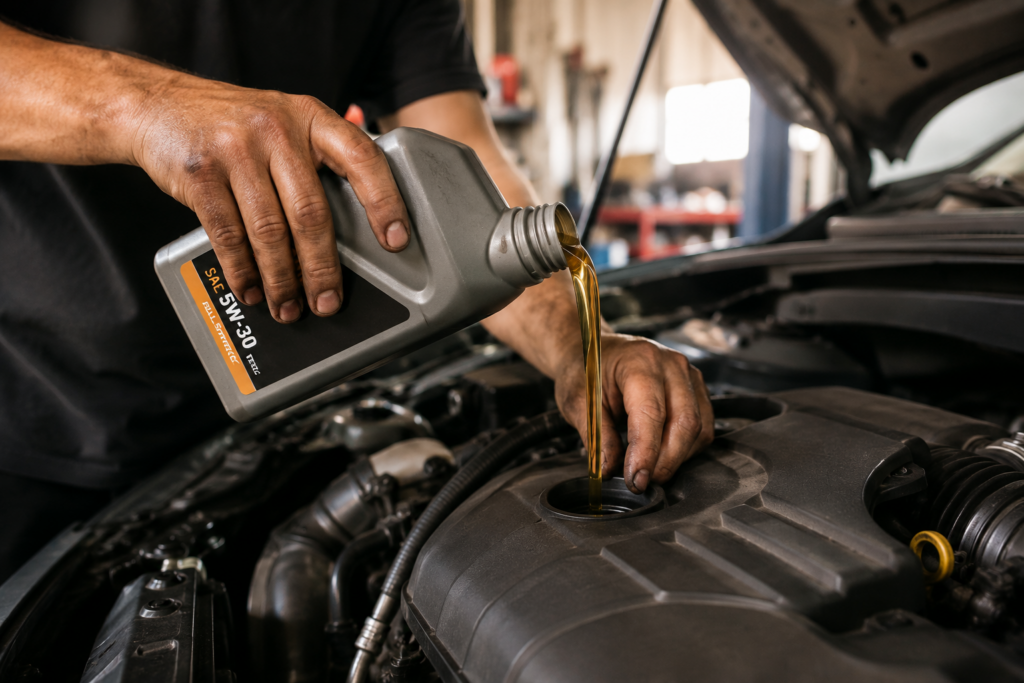
Engine oil does several critical jobs simultaneously. It lubricates the hundreds of moving metal parts inside your engine, reducing friction and preventing wear. It helps cool engine components that the cooling system can’t reach. It cleans the engine by suspending contaminants and carrying them to the oil filter. And it helps seal the small gaps between piston rings and cylinder walls.
Over time, oil breaks down. Heat, friction, and contamination degrade its ability to do these jobs effectively. Old, dirty oil becomes thick and sludgy, loses its lubricating properties, and can actually accelerate engine wear rather than prevent it. That’s why regular oil changes aren’t optional: they’re one of the most fundamental things you can do to keep your engine running.
The 3,000-Mile Myth
The 3,000-mile oil change interval made sense decades ago, when engines were less refined and conventional motor oil degraded more quickly. Today, it’s largely outdated.
Modern synthetic and synthetic-blend motor oils are engineered to last significantly longer than their conventional predecessors. Modern engines are also built to tighter tolerances, run cleaner, and place less stress on the oil. The result is that most current vehicles can go considerably longer between oil changes without any negative effects.
Sticking rigidly to the 3,000-mile rule with a modern vehicle that calls for 7,500 or 10,000-mile intervals doesn’t protect your engine, it just costs you more money in unnecessary oil changes.
So How Often Should You Actually Change Your Oil?
The honest answer: it depends on your vehicle, the type of oil it uses, and how you drive. Here are the general guidelines:
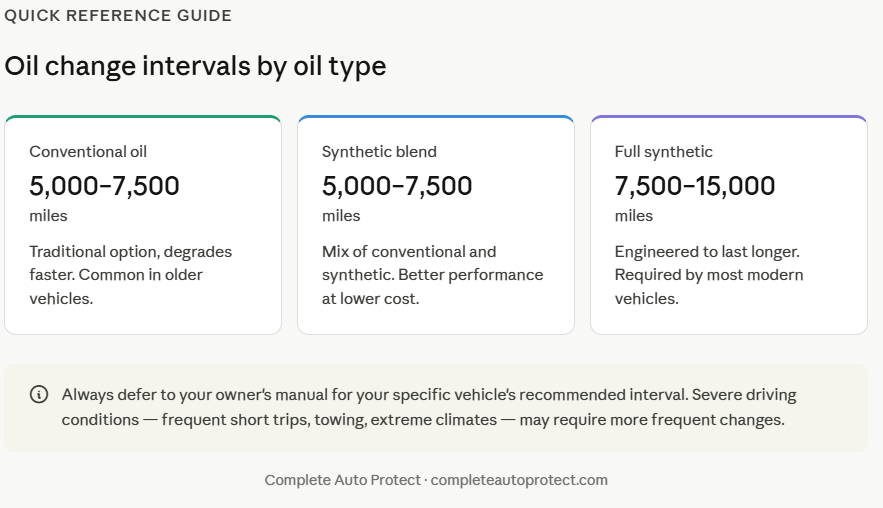
Conventional oil: 5,000 to 7,500 miles. Conventional oil is the traditional option and is still used in older vehicles or those with simple engine designs. It degrades faster than synthetic and requires more frequent changes.
Synthetic blend oil: 5,000 to 7,500 miles. A mix of conventional and synthetic oil, offering better performance than conventional at a lower cost than full synthetic.
Full synthetic oil: 7,500 to 15,000 miles. Full synthetic oil is engineered to last longer and perform better across a wider range of temperatures. Many modern vehicles specify full synthetic, and their recommended intervals reflect it.
The single most reliable source for your specific vehicle’s oil change interval is your owner’s manual. It will tell you exactly what type of oil your engine requires and how frequently it should be changed under both normal and severe driving conditions.
What Counts as “Severe” Driving?
Many drivers assume their commute is “normal” driving. In reality, a lot of everyday driving qualifies as severe by automotive standards. Conditions that accelerate oil degradation include:
- Frequent short trips under five miles, particularly in cold weather
- Stop-and-go city driving
- Towing or hauling heavy loads regularly
- Driving in extremely hot or cold climates
- Extended idling
- Driving on dusty or unpaved roads
If any of these describe your typical driving, you should change your oil more frequently than the standard recommendation, even if your car uses full synthetic.
Does Your Car Have an Oil Life Monitor?
Many modern vehicles come equipped with an oil life monitoring system that tracks driving conditions, engine temperature, RPMs, and other factors to estimate how much useful life remains in your oil. When the monitor indicates it’s time for a change, typically by displaying a percentage or triggering a dashboard alert, that’s your cue.
These systems are generally accurate and reliable. If your vehicle has one, it’s worth using it rather than defaulting to a fixed mileage interval that may not reflect your actual driving conditions.
Conventional vs. Synthetic Oil: Which Should You Use?
Always use the oil type specified in your owner’s manual. Using the wrong type, or the wrong viscosity grade, can void your warranty and potentially cause engine damage.
If your manual specifies full synthetic, use full synthetic. The cost difference between synthetic and conventional is real but modest, and the extended interval largely offsets it. Trying to save money by using conventional oil in an engine designed for synthetic is a false economy.
What Happens If You Wait Too Long?
Skipping or significantly delaying oil changes is one of the most common, and most avoidable, causes of premature engine wear. Here’s what happens when oil is left too long:
Sludge buildup: Degraded oil thickens into a sludge that can clog oil passages and starve engine components of lubrication. Once sludge has formed, it can be extremely difficult to remove without engine damage already done.
Increased wear: Without adequate lubrication, metal components grind against each other, accelerating wear on bearings, camshafts, and other critical parts.
Overheating: Oil helps manage engine temperature. Degraded oil is less effective at this, contributing to overheating.
Engine failure: In severe cases, neglected oil changes can lead to catastrophic engine failure – a repair that can cost $4,000 to $8,000 or more depending on your vehicle.
The good news is that engine damage from neglected oil changes is almost entirely preventable. It’s one of the cheapest forms of insurance you can buy for your engine.
How Much Does an Oil Change Cost?
Oil change costs vary depending on the type of oil and where you go:
Conventional oil change: $35–$75 at most shops or quick-lube centers.
Synthetic blend oil change: $45–$90.
Full synthetic oil change: $65–$125. Higher upfront, but the extended interval means you’re paying for fewer changes per year.
Dealership oil change: Often slightly higher than independent shops, but may include multi-point inspections and use manufacturer-specified oil.
Don’t Forget the Oil Filter
Every oil change should include a new oil filter. The filter traps contaminants suspended in the oil; replacing the oil without replacing the filter means clean oil immediately picks up the debris left behind in the old filter. It’s a small additional cost that’s always worth it.
How an Extended Auto Warranty Fits In
Regular oil changes are one of the most important things you can do to protect your engine, but they can’t prevent every mechanical failure. Engines, transmissions, and other major components can still fail even in well-maintained vehicles, and when they do, the repair bills are significant.
A vehicle service contract from Complete Auto Protect covers major mechanical breakdowns so that when something goes wrong despite your best maintenance efforts, you’re not left facing the full cost alone.
Get a free quote from Complete Auto Protect today.
The Bottom Line
Forget the 3,000-mile rule. Check your owner’s manual, use the right oil for your engine, and change it at the interval your manufacturer recommends – adjusting for severe driving conditions if they apply. It takes a few minutes and costs relatively little, and it’s one of the single most effective things you can do to extend the life of your engine.