
Your brakes are the single most important safety system on your vehicle. Every time you slow down for a red light, merge onto a highway, or avoid a hazard in the road, your braking system is doing its job. When it starts to fail, the consequences can be serious.
The good news is that brakes rarely fail without warning. Like most mechanical systems, they give you plenty of signals before they reach a critical point. Knowing what to look for, and acting on it promptly, keeps you safe and can prevent a straightforward brake job from turning into a much more expensive repair.
Here’s what to watch for.
How Brakes Work
Before diving into the warning signs, a quick primer on how your braking system works helps put the symptoms in context.
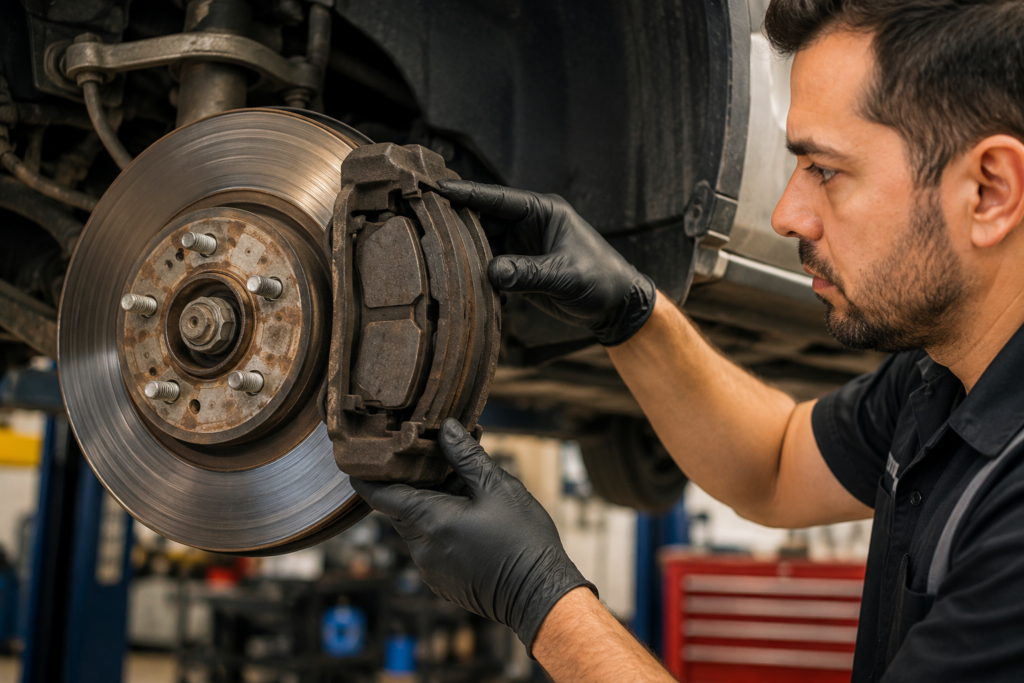
When you press the brake pedal, hydraulic pressure forces brake calipers to squeeze brake pads against a metal disc called a rotor. This friction slows the wheel and brings your car to a stop. Over time, the friction material on the brake pads wears down. When it wears too thin, the pads lose their effectiveness; and if left long enough, the metal backing plate behind the pad makes direct contact with the rotor, causing significant damage to both components.
Catching brake wear before it reaches that point is the goal.
1. Squealing or Squeaking Noises
This is the most common and recognizable sign that your brakes need attention. Most brake pads are equipped with a small metal tab called a wear indicator that’s designed to make a high-pitched squealing noise when the pad material wears down to a certain level. Think of it as your brake system’s built-in alarm.
If you hear a consistent squealing or squeaking noise when applying the brakes, particularly one that goes away when you release the pedal, it’s time to have your brake pads inspected.
Note that some squealing after the car has been sitting overnight or in wet conditions is normal and usually clears up after a few stops. Persistent squealing is the signal to pay attention to.
What to do: Schedule a brake inspection promptly. At this stage, you likely just need new pads – a relatively affordable repair.
2. Grinding Noise When Braking
If squealing is the warning, grinding is the alarm. A grinding or growling noise when you apply the brakes typically means the brake pad material has worn away completely and the metal backing plate is now making direct contact with the rotor.
This is both a safety concern and a costly one. Metal-on-metal contact damages the rotors quickly, turning what would have been a pad replacement into a pad and rotor replacement, significantly increasing the repair cost.
What to do: Get to a mechanic as soon as possible. Don’t delay on this one.
3. Vibration or Pulsing When Braking
If your steering wheel or brake pedal vibrates or pulses when you apply the brakes, you’re likely dealing with warped rotors. Rotors can warp from excessive heat – often caused by heavy braking, towing, or prolonged driving in hilly terrain – and when they do, the uneven surface causes the vibration you feel through the pedal or wheel.
Warped rotors don’t just affect comfort: they reduce braking effectiveness and can accelerate pad wear. In some cases rotors can be resurfaced rather than replaced, but heavily warped or worn rotors will need to be replaced entirely.
What to do: Have your rotors inspected. The earlier you address this, the more likely resurfacing is an option.
4. Soft or Spongy Brake Pedal
Under normal conditions, your brake pedal should feel firm and responsive, with consistent resistance as you press it. If the pedal feels soft, spongy, or sinks closer to the floor than usual before the brakes engage, something is wrong with your braking system.
Common causes include air in the brake lines, a brake fluid leak, or a failing master cylinder. Any of these can significantly compromise your ability to stop the vehicle effectively.
What to do: This is a safety issue that warrants immediate attention. Don’t drive the vehicle until it has been inspected.
5. Pulling to One Side When Braking
If your car pulls to the left or right when you apply the brakes, it typically indicates uneven brake wear — one side is doing more work than the other. This can be caused by a stuck brake caliper, uneven pad wear, or a brake fluid issue.
Beyond the handling concern, pulling under braking puts uneven stress on your braking components and can accelerate wear on one side of the vehicle.
What to do: Have the braking system inspected on both sides. This is also worth investigating as a potential tire or alignment issue if it occurs independently of braking.
6. Brake Warning Light
Most modern vehicles have a dedicated brake warning light on the dashboard, separate from the ABS warning light. If it illuminates, your vehicle has detected an issue with the braking system that needs to be diagnosed.
Common triggers include low brake fluid, a parking brake left partially engaged, or a sensor detecting that pad thickness has dropped below a safe level. Some vehicles also have a separate pad wear indicator light that activates when pads are running thin.
What to do: Check that your parking brake is fully released first. If the light remains on, have the system inspected.
7. Burning Smell After Heavy Braking
A sharp, acrid burning smell after driving in stop-and-go traffic, descending a long hill, or repeated hard braking is a sign that your brakes are overheating. Overheated brakes lose effectiveness – a phenomenon known as brake fade – and sustained overheating can warp rotors and degrade brake fluid.
If you notice this smell, pull over safely and allow your brakes to cool before continuing. Continuing to drive on overheated brakes significantly increases stopping distances.
What to do: Allow the brakes to cool completely. If the smell persists under normal driving conditions, have the system inspected – a stuck caliper may be the cause.
8. Longer Stopping Distances
If your car feels like it’s taking longer to stop than it used to, trust that instinct. Increased stopping distances are a direct sign that your braking system’s effectiveness has been compromised – whether from worn pads, degraded brake fluid, rotor issues, or a combination of factors.
This is one of the more dangerous warning signs because it’s easy to dismiss as normal, until you need to stop quickly and can’t.
What to do: Have the entire braking system inspected immediately.
How Long Do Brakes Last?
Brake pad lifespan varies widely depending on driving habits, vehicle weight, and pad material:
City driving: 25,000–40,000 miles. Frequent stop-and-go driving wears pads faster than highway driving.
Highway driving: 40,000–70,000 miles. Less frequent braking means slower wear.
Aggressive driving or towing: Can significantly reduce pad life regardless of mileage.
Rotors typically last through two to three sets of brake pads, but this varies based on driving conditions and whether pads were replaced before causing rotor damage.
How Much Does a Brake Job Cost?
Brake repair costs vary depending on what needs to be replaced and your vehicle’s make and model, but here’s a general idea based on RepairPal’s estimates.
Brake pad replacement (per axle): $150–$300 Brake pad and rotor replacement (per axle): $300–$600 Brake caliper replacement: $300–$800 per caliper Full brake system service (all four corners): $600–$1,200+
Luxury and European vehicles typically fall at the higher end of these ranges due to parts costs and specialized labor.
How an Extended Auto Warranty Can Help
While routine brake pad replacement is considered a wear item and isn’t typically covered under extended warranty plans, brake system components like calipers, master cylinders, and ABS systems may be covered depending on your plan. At Complete Auto Protect, our flexible coverage plans are designed to protect you against the unexpected mechanical failures that go beyond routine maintenance.
Get a free quote from Complete Auto Protect today.
Don’t Wait on Brake Issues
Of all the warning signs on this list, brake problems are the ones that deserve the most urgency. Unlike a check engine light that might indicate something minor, brake warning signs directly affect your ability to stop your vehicle safely.
If something feels or sounds off with your brakes, get it looked at. The cost of a brake inspection is minimal. The cost of waiting isn’t.